Relationship to Place — Traveling with Respect
To travel well is not just to arrive somewhere new.
It is to understand how to be there.
Introduction
There is a growing awareness that the way we travel matters.
For a long time, travel has been shaped by consumption: moving through places quickly, taking in experiences, and leaving with little consideration for the deeper impact on the land or the people who live there.
But there is another way to move through the world.
One rooted in respect, reciprocity, and relationship.
Being a Guest
At the core of this approach is a simple shift in perspective.
You are not arriving as a consumer.
You are arriving as a guest.
This changes everything.
It affects how you move, how you listen, and how you engage with both people and place.
It invites a level of humility that is often missing in modern travel.
Moving Beyond Extraction
Much of global travel operates on an extractive model.
Experiences are packaged, optimized, and delivered with efficiency.
What is often lost in that process is relationship.
To travel with respect means stepping out of that pattern.
It means asking different questions:
How do we engage without taking more than we give?
How do we show up in a way that honors the integrity of a place?
How do we avoid turning culture into something to be consumed?
Learning from Place and People
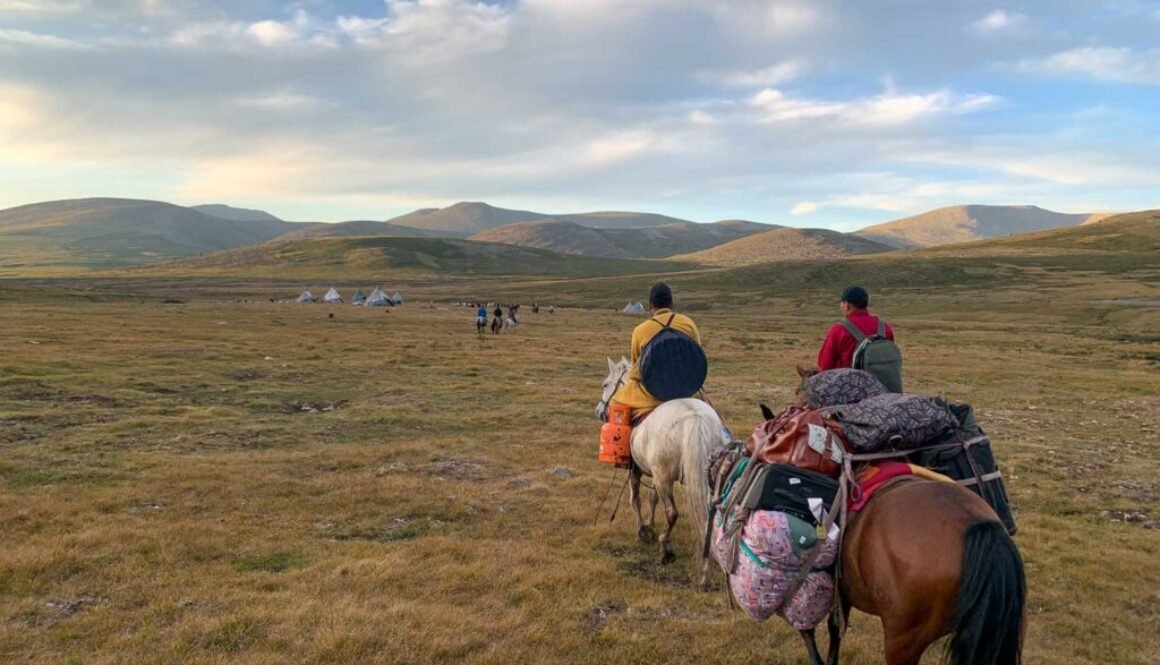
In Mongolia, life is still deeply shaped by the land.
Nomadic traditions, spiritual practices, and daily rhythms are closely tied to environment and season.
There is a different understanding of relationship — one that includes land, animals, and unseen forces as part of a larger whole.
To spend time in this context is to be invited into a different way of sensing.
Not something to adopt or imitate, but something to learn from.
The Role of Guidance
This kind of experience does not happen by accident.
It is made possible through relationship and collaboration.
Local guides, elders, artists, and knowledge holders play a central role.
They offer access, context, and a bridge into the deeper layers of a place.
Without that, it is easy to remain on the surface.
Reciprocity in Practice
Respect is not just a mindset.
It is expressed through action.
This includes how journeys are structured, who is involved, and how value flows.
Creating opportunities for local participation, supporting communities directly, and building long-term relationships are all part of this approach.
It is an ongoing process, not a fixed solution.
What This Means for Participants
For those joining these journeys, this orientation shapes the experience in subtle but important ways.
It asks for presence.
It asks for openness.
It asks for a willingness to move beyond familiar patterns of travel.
In return, it offers a deeper level of connection — not only to the place itself, but to the experience of being in relationship with it.
Closing
Travel has the potential to be more than movement across distance.
It can be a way of entering into relationship.
With place.
With people.
With something beyond ourselves.
Explore the Journeys
If this way of traveling resonates, explore the journeys designed with these principles in mind.