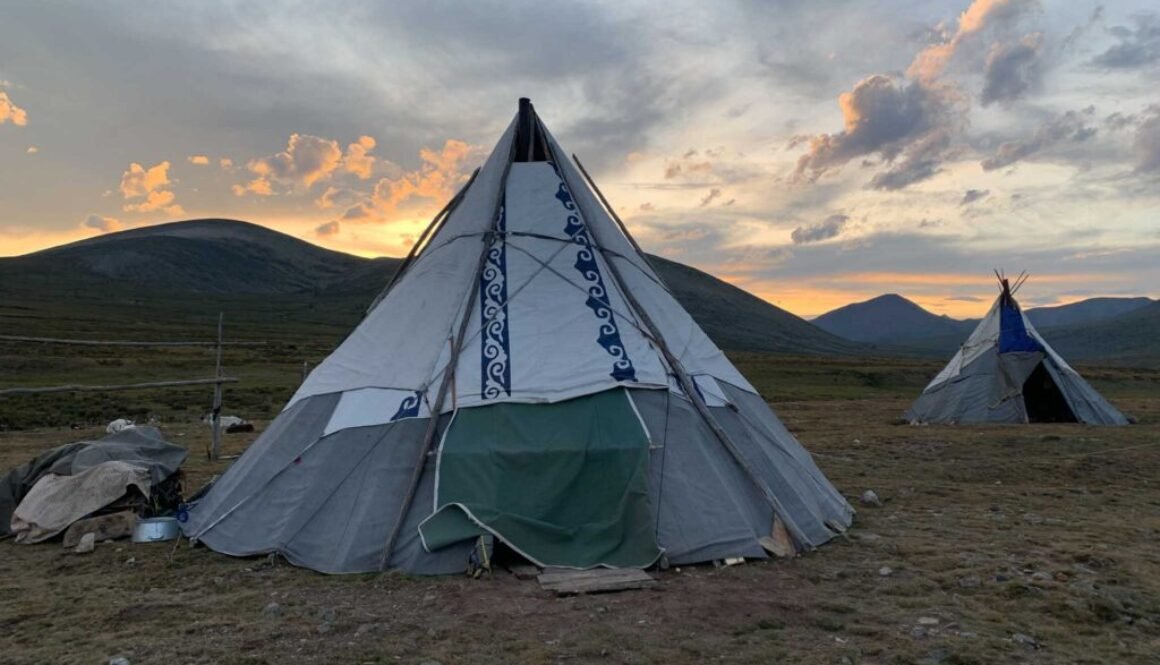
Pilgrimage as a Modern Healing Practice
In a world defined by speed, noise, and constant input, there is a growing pull toward something older, quieter, and more essential.
Introduction
For most of human history, pilgrimage was not a niche spiritual activity. It was a fundamental way people made sense of their lives.
People walked. They crossed landscapes. They left the familiar behind in search of clarity, healing, or connection to something larger than themselves.
Today, that instinct has not disappeared. It has simply been buried under convenience, distraction, and the illusion that everything we need can be found without ever leaving where we are.
And yet, more than ever, people are feeling the call to step away.
What Pilgrimage Actually Is
Pilgrimage is not tourism.
It is not about checking places off a list or moving quickly through a landscape.
It is movement with intention.
A pilgrimage creates a container where something can shift. The combination of physical movement, unfamiliar environment, and focused attention begins to reorganize how we relate to ourselves and the world around us.
There is a reason this pattern exists across cultures and throughout history. It works.
The Role of Land
In modern life, we often treat the environment as background.
On pilgrimage, the land becomes an active participant.
Vastness, silence, and exposure to elemental conditions begin to strip away the layers we carry in everyday life. Without constant stimulation, something more fundamental starts to surface.
Clarity doesn’t come from adding more information. It comes from creating the conditions where we can actually hear ourselves again.
Movement as a Reset
There is also something essential about moving through space.
Whether walking, riding, or traveling across open landscapes, the act of moving forward has a direct effect on the nervous system.
It creates rhythm. It creates space.
It allows the body to process what the mind often cannot resolve on its own.
In this way, pilgrimage functions as a kind of embodied reset — not through force, but through alignment with something more natural.
Why This Matters Now
We are living in a time where many of the structures people relied on for meaning and stability are shifting.
There is more access than ever before, and yet many people feel disconnected — from themselves, from others, and from the natural world.
Pilgrimage offers a different orientation.
Not as an escape, but as a way to return.
A way to step out of the noise and re-establish a relationship with what actually matters. Relationality.
Beyond Retreat or Travel
It’s common to frame experiences as either retreats or trips.
Pilgrimage sits somewhere else.
It holds elements of both, but is defined less by what is offered and more by how it is approached.
It asks something of the participant: presence, openness, and a willingness to engage.
In return, it offers something that cannot be easily replicated in more controlled or familiar environments.
Closing
Pilgrimage is not new.
But it may be more relevant now than ever.
As the pace of life accelerates and complexity increases, the need for simple, grounded, and embodied ways of reconnecting becomes more important.
Pilgrimage is one of those ways.
Explore the Journeys
If this resonates, the next step is not to read more — but to experience it.