Why We Call This an Initiation, Not a Program
What a frozen lake, a language barrier and a hunt ask of someone used to leading through expertise.
We aren’t going to Mongolia simply to bring our own teachings.
We’re going there to be taught.
By the land. By the winter. By people whose lives require forms of attention, interdependence, patience, and resilience that many of us have lost contact with.
Bjoern and I bring years of leadership work and facilitation into this journey. But we aren’t building it around a leadership framework and then using Mongolia as the backdrop.
Mongolia is part of the teaching.
And the learning happens through the body.
That’s why we call this an initiation, not a program.
Beyond the familiar
Initiation begins with leaving familiar territory.
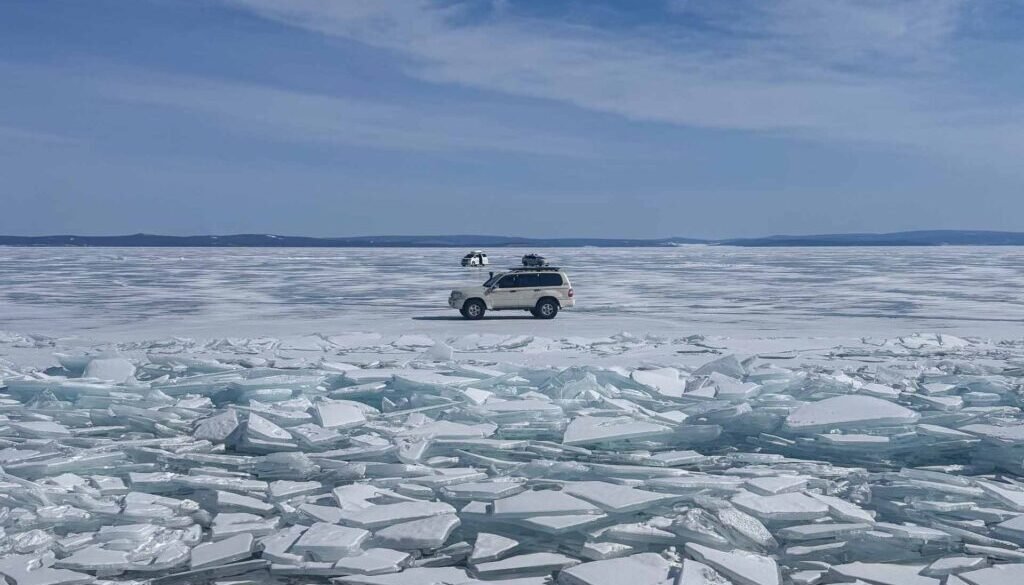
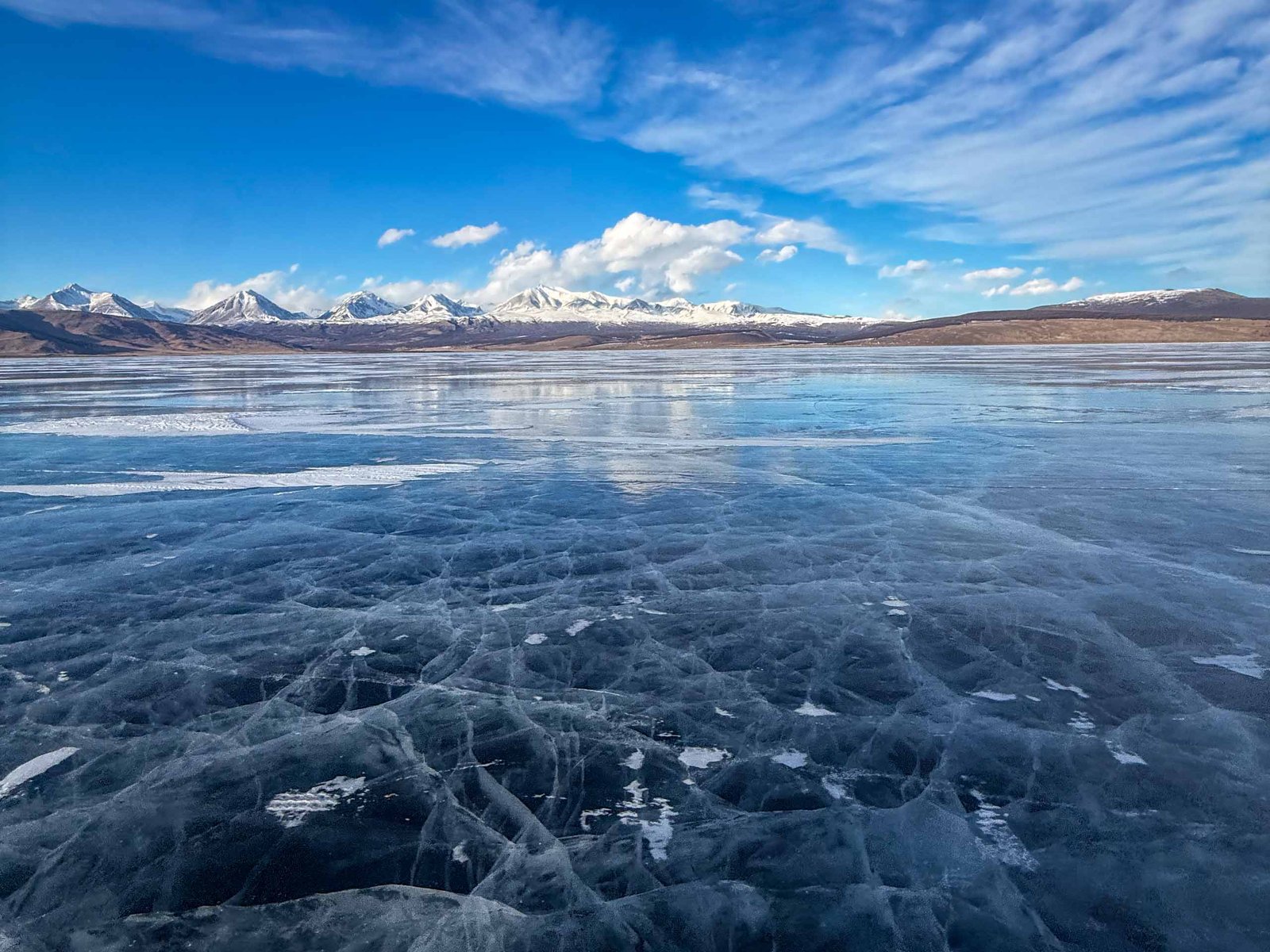
In February, we travel into northern Mongolia, toward the Siberian border, where winter temperatures can fall below minus 30°F (minus 34°C). We cross a frozen Lake Khuvsgul. We travel into the taiga. We enter places where the structures most of us rely on—comfort, language, schedules, constant connectivity, even our ordinary sense of competence—begin to fall away.
We do this carefully, with experienced local guides and in relationship with the communities who live there.
The point isn’t hardship for hardship’s sake.
The point is to encounter ourselves beyond the environments in which we already know how to succeed.
Leadership today increasingly asks us to operate without certainty: to make decisions when the map is incomplete, to stay present when circumstances change, and to remain connected to others when we don’t know what comes next.
There are things we can learn about that in a seminar room.
There are other things we can only learn by entering the unknown.
 Becoming dependent again

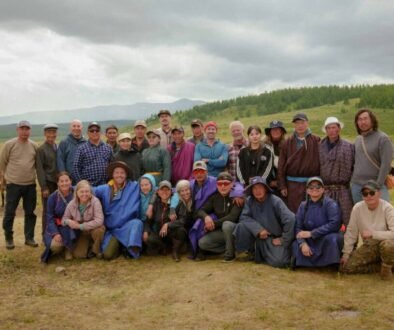
In the taiga, we will stay with reindeer-herding families in their teepees and cabins and participate, as guests, in the rhythms of daily life.
Tending animals. Making fires. Preparing food. Moving through the winter landscape.
Here, interdependence isn’t an organizational value written on a wall. It is a condition of life.
There will also be a language barrier.
Many of the people we stay with won’t speak English. Leaders who are accustomed to navigating the world through expertise, language, status, and competence will suddenly find themselves dependent on people with whom they may not be able to have a conventional conversation.
That reversal matters.
What happens when we can’t lead through knowing?
When we have to watch, listen, receive, and trust?
When someone else knows the terrain and we don’t?
Humility is easy to value in theory.
It’s different to need someone.
Power, responsibility, and reciprocity
We will also spend time learning from Mongolian hunters.
Before anyone hunts, we learn.
How to move through the landscape. How to track. How to wait. How to listen. How to safely handle a firearm. How hunting is understood within this particular relationship between people, animals, land, and survival.
There is no guarantee that an animal will be killed. That’s part of the teaching too.
Hunting brings us into direct contact with questions many leaders spend their lives navigating in more abstract forms:
What does it feel like to hold power?
When do we act, and when do we refrain?
What responsibility comes with having the capacity to act?
What does reciprocity ask of us when our lives depend upon other lives?
These aren’t questions we’re going to Mongolia to answer once and for all.
We’re going there to feel them differently.
Along the way, we will also learn from a shaman, leaders within the reindeer-herding community, and contemporary Mongolian leaders who are finding their own ways to bring traditional knowledge and cultural inheritance into the present.
Leadership, in this context, becomes larger than management.
It becomes a question of relationship: to power, to community, to ancestry, to place, and to life itself.
What emerges
We can’t know exactly what this journey will bring up.
That’s part of its design.
Bjoern and I have trained together for years in collective trauma facilitation with Thomas Hübl, and we bring that experience into how we hold the group.
But rather than moving participants through a predetermined curriculum, we work with what emerges.
An experience of dependence may reveal how difficult it is to receive help.
Holding a firearm may surface something about power.
Being unable to communicate may expose the need to be understood or in control.
The intensity of the environment may reveal the ways we perform competence when we’re actually afraid.
And the vastness of the landscape may reconnect someone to a sense of purpose that has become obscured by the demands of their role.
This is where the inner work of leadership enters.
Not: How can I become a more effective leader?
But: What is my leadership in service of?
And what in me gets in the way of serving that?
The edge, and the rest
Initiation isn’t only about going to the edge.
It’s also about what allows us to meet the edge without abandoning ourselves.
Throughout the journey, we create spaces for processing and integration. There will be breathwork and embodiment practices, group circles, and time for deep rest.
Toward the end, after the intensity of the taiga and the frozen lake, we go to hot springs.
That isn’t an indulgence separate from the work.
It’s part of it.
Many leaders have become extraordinarily skilled at carrying responsibility while chronically overriding their own limits.
So another question runs through this journey:
What would leadership feel like if we were deeply resourced?
If receiving support were as natural as providing it?
If we no longer believed that holding responsibility meant holding everything alone?
Why an initiation
Before Mongolia, we meet virtually as a group.
We begin building trust, clarifying intentions, and opening the questions each person is bringing into the journey.
Then we leave.
We cross a threshold into a landscape where many of our ordinary reference points disappear. We encounter people, practices, conditions, and parts of ourselves that we cannot entirely anticipate.
And then we return.
After Mongolia, we gather again—not to reduce what happened into a set of leadership lessons, but to ask how the experience wants to live through us.
What changes when we return to our organizations, families, and communities?
What do we do differently with power?
What becomes less important?
What are we willing to protect?
What are we actually in service of?
That arc—preparation, departure, threshold, encounter, return, integration—is ancient.
It is the shape of initiation.
A program gives us information to bring back into the lives we already have.
An initiation asks whether we are willing to return differently.
For more on the thinking behind this journey, read Why this leadership, and why this container.
The Winter Leadership Pilgrimage
February 11–24, 2027. Fourteen days in northern Mongolia, with a small group.